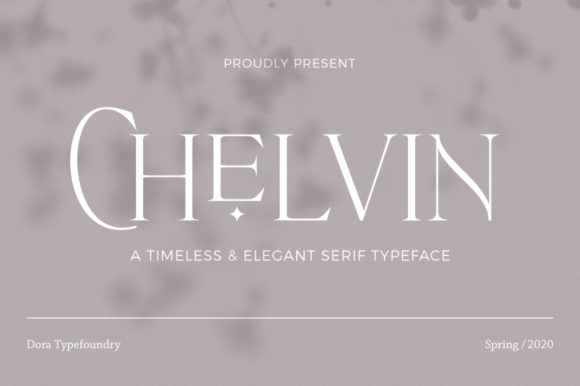
Chelvin: A Serif Font for Polished Branding
It was a busy morning at the local bakery, and I found myself staring at a stack of packaging boxes that felt a little too generic. The logo was okay, but the font didn’t quite match the warmth and quality of the pastries inside. That’s when I discovered Chelvin—a neat and tall serif font that brought a fresh, professional look to every design I tried it on.
What Makes Chelvin Unique?
Chelvin has a natural and unique style that feels both modern and timeless. Its clean lines and subtle flourishes give it an elegant personality that works well in a variety of settings. Whether you’re designing a logo, a menu, or a product label, Chelvin adds a touch of sophistication without being overwhelming.
As a creative consultant, I’ve seen how the right typeface can transform a brand. Chelvin stands out because it’s versatile enough to work with different design elements while maintaining its own character. It’s not just a font—it’s a tool for creating a cohesive and memorable brand identity.
Real-World Applications for Small Businesses
One of my clients, a small candle shop, was looking to refresh their product labels. They wanted something that felt premium but still approachable. Chelvin worked perfectly for the product names and descriptions, giving the labels a polished look that matched the quality of their handmade candles.
Another example was a café that needed a new menu. The previous design felt cluttered and hard to read. By using Chelvin for the headings and key items, the menu became more legible and visually appealing. Customers could easily spot what they were looking for, and the overall experience felt more refined.
For a skincare brand, Chelvin was used on product labels and packaging. The font added a sense of trustworthiness and professionalism, which is essential in the beauty industry. It helped the brand stand out on shelves while maintaining a clean and consistent look across all materials.
When to Use Chelvin
Chelvin excels as a display font for headlines, logos, and short phrases. It’s ideal for anything that needs to grab attention while still feeling elegant. However, it’s not the best choice for long paragraphs of text due to its decorative elements, which can affect readability.
That said, with careful design choices, Chelvin can be used effectively in smaller sizes for product tags, stickers, and social media thumbnails. The key is to keep the text concise and ensure there’s enough space around the letters to maintain clarity.
For business cards and thank-you notes, Chelvin adds a personal and professional touch. It’s also great for website banners, Instagram promotions, and digital ads where visual impact matters.
Pairing Chelvin with Other Fonts
When pairing fonts, it’s important to balance contrast and harmony. Chelvin works well with clean sans serif fonts like Helvetica or Montserrat for body text. This creates a nice contrast that keeps the design from feeling too ornate.
For a more elegant look, pair Chelvin with another serif font like Georgia or Garamond. This can add depth and sophistication to editorial designs, packaging, and branding materials.
If you’re going for a more casual or artistic feel, consider pairing Chelvin with a script or handwritten font. This combination can add a personal touch to invitations, greeting cards, and promotional materials.
Design Tips for Maximum Impact
When using Chelvin for small labels or mobile screens, make sure the font size is large enough to read clearly. Avoid overcrowding text, and use proper spacing between letters and lines to improve readability.
For printed packaging, test the font at different sizes and under various lighting conditions. Chelvin looks great in print, but it’s important to ensure it doesn’t lose its clarity when scaled down.
On social media thumbnails, use Chelvin for headlines and key messages. Keep the rest of the design simple so the font can shine without competing with other elements.
Finally, always check the font’s file formats, weights, and multilingual support before using it for commercial projects. Make sure you have the correct licensing for your intended use, whether it’s for product packaging, client work, or digital downloads.